
Electronic Voting Machine
An 8051 academic hardware prototype for candidate input, vote counting and LCD result display, including debouncing and winner/tie logic.
Engineering case study
The engineering brief
Turn multiple-candidate button inputs into counted votes and clear LCD results, including the cases where a winner or a tie must be displayed.
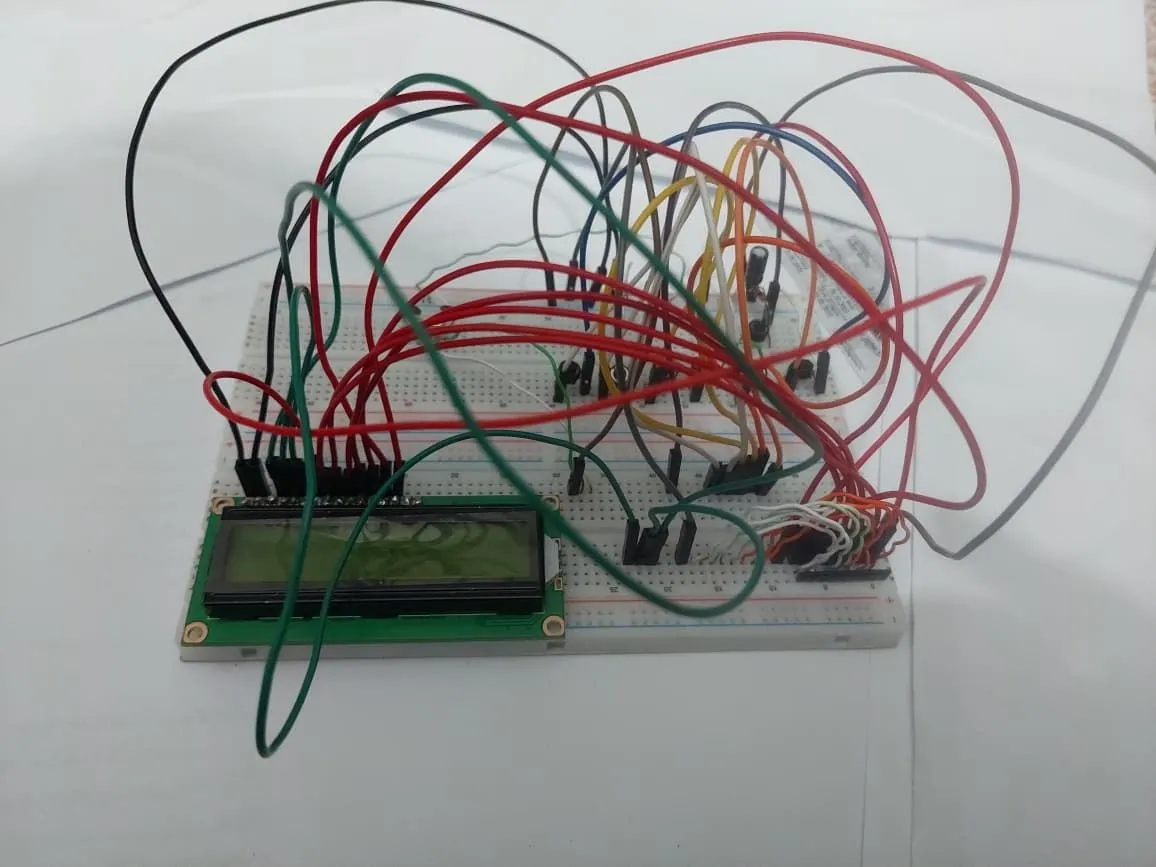
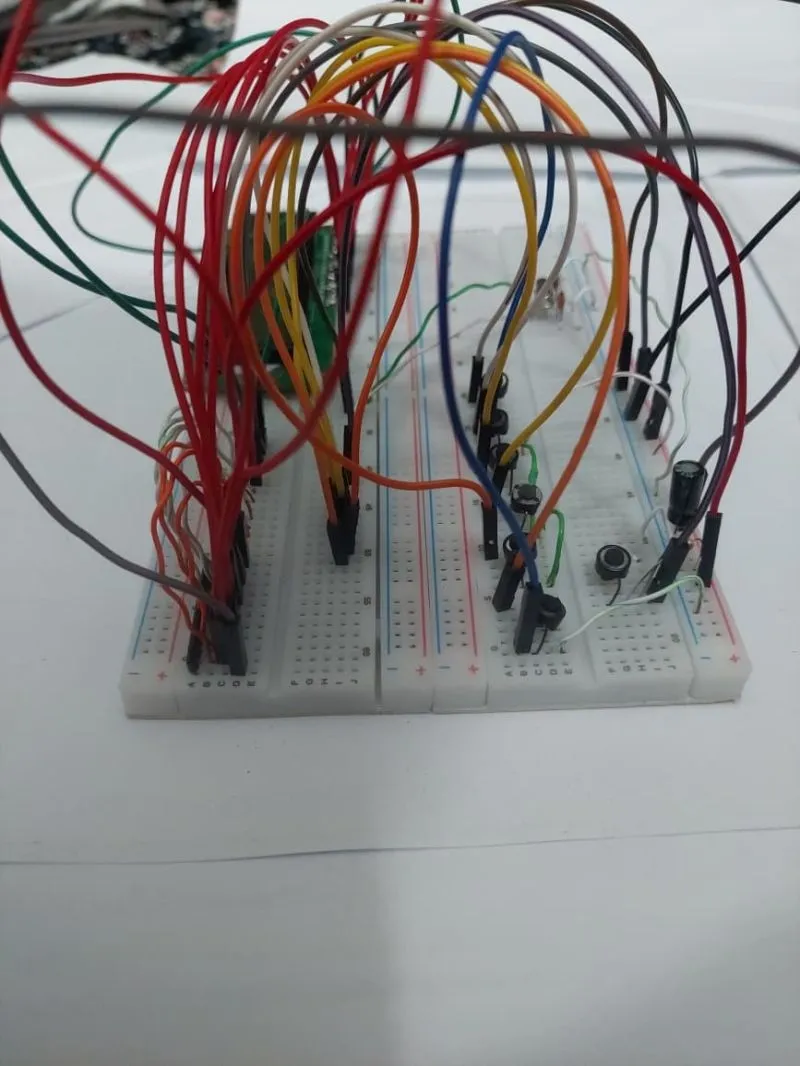
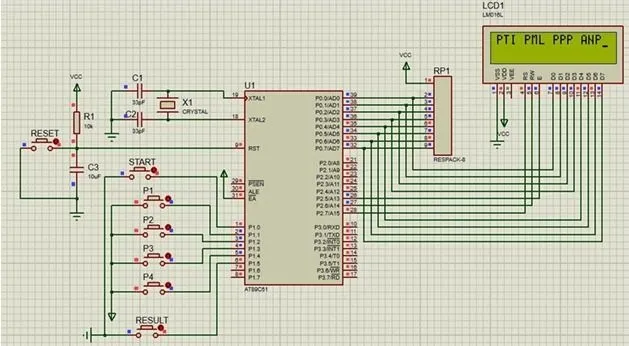
The Electronic Voting Machine is an academic embedded-system prototype using an 8051 microcontroller. Push buttons accept votes for multiple candidates, and a 16×2 LCD presents counts and calculated results. Embedded C logic handles switch debouncing, vote counting and winner or tie detection. Hardware photographs and a Proteus schematic document the implementation.
Input, counting & display
- Interfaced multiple candidate push buttons with an 8051-family microcontroller and a 16×2 LCD.
- Used software debouncing to account for the mechanical behaviour of the button inputs.
- Implemented vote counting and result calculation in Embedded C, with logic to identify a winner or a tie.
- Linked the circuit design to the breadboard implementation, using the LCD as the result-display interface.
Design constraints
- Button input handling and result logic both affect the displayed counts; switch debouncing is part of the prototype implementation.
- The educational scope does not establish an independently assessed security model or certification for real elections.
Work & results in context
- Assembled the academic voting-machine prototype shown in the hardware views.
- Connected input handling, counting, winner/tie logic and LCD interfacing in one Embedded C implementation.
Engineering takeaways
- A small embedded system can bring together physical input, maintained state and meaningful output.
- Handling a tie explicitly makes result logic part of the design rather than an afterthought.
Visual record
Images & diagrams
Continue exploring
More engineering work
Electric mobility
Range Extended Electric Vehicle
Developing a REEV prototype for areas with limited charging infrastructure, combining electric propulsion with an engine-driven generator. FYP-1 established the architecture and integration methodology.
View projectEmbedded systems
Multi-Sensor Navigation Robot
An implemented Arduino semester prototype combining line tracking, obstacle sensing and ambient-light response through embedded control.
View projectEmbedded systems
Smart Access & Monitoring
An 8051 access-control and environmental-monitoring design combining PIN authentication, sensor inputs, event logging and emergency override.
View project