
Autonomous Multi-Sensor Navigation Robot
An implemented Arduino semester prototype combining line tracking, obstacle sensing and ambient-light response through embedded control.
Engineering case study
The engineering brief
Combine line tracking, obstacle sensing and ambient-light input in one mobile prototype, then translate sensor information into motor decisions.
Built for Electrical Measurements & Instrumentation, the prototype combines several sensor inputs in a compact autonomous robot. An Arduino UNO processes dual IR line-sensor signals, HC-SR04 obstacle-distance information and LDR ambient-light input, then drives the motors through an L298N interface. Its architecture separates sensing, processing, actuation and power management.
From sensing to motor control
- Organised the system into sensing, processing, actuation and power management, with Arduino UNO/ATmega328P as the processing unit.
- Used dual IR sensors to follow a line, an HC-SR04 ultrasonic sensor to detect obstacles and an LDR to provide ambient-light input.
- Connected Embedded C/C++ control decisions to the L298N motor driver, using PWM for motor actuation.
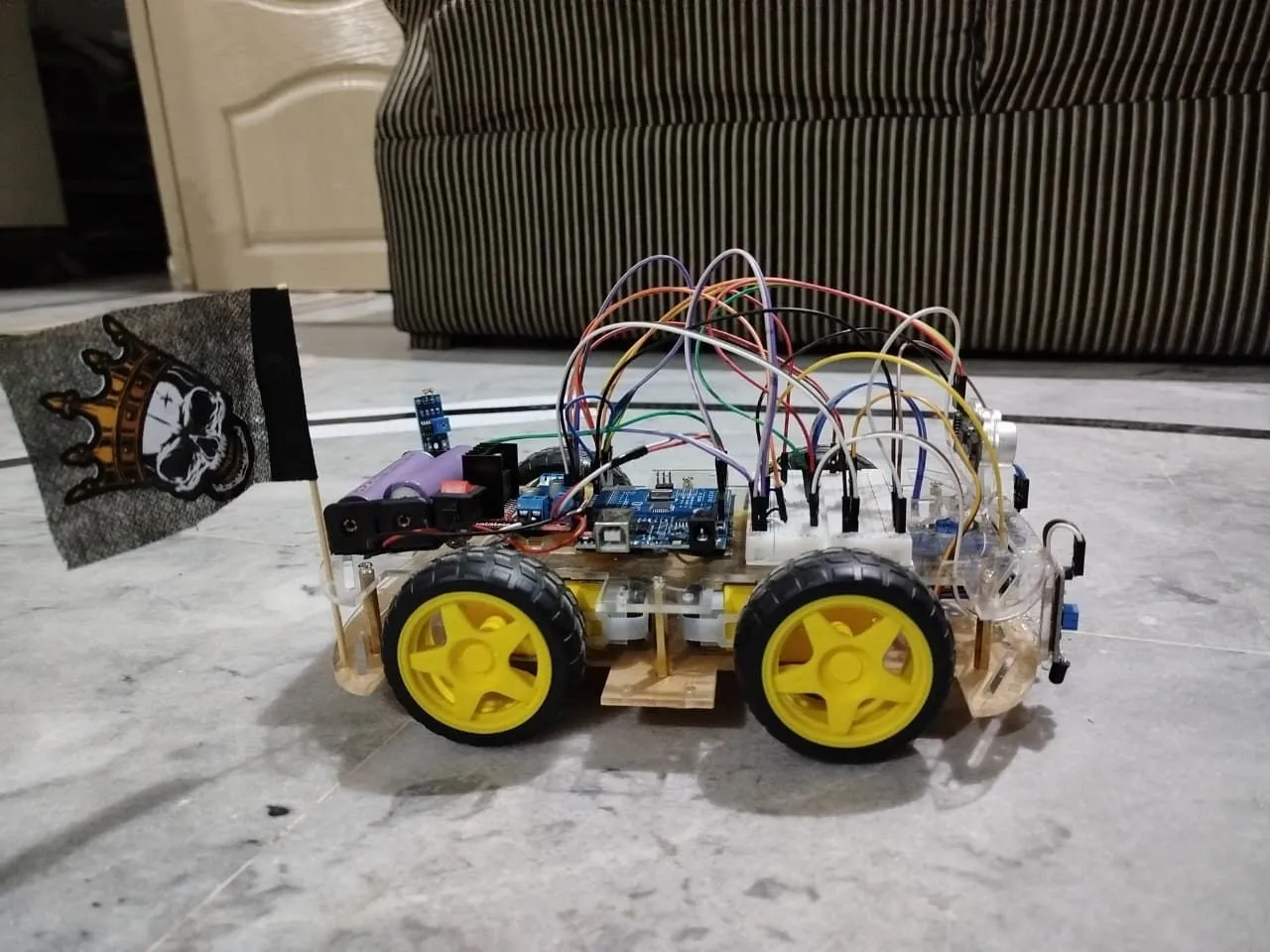
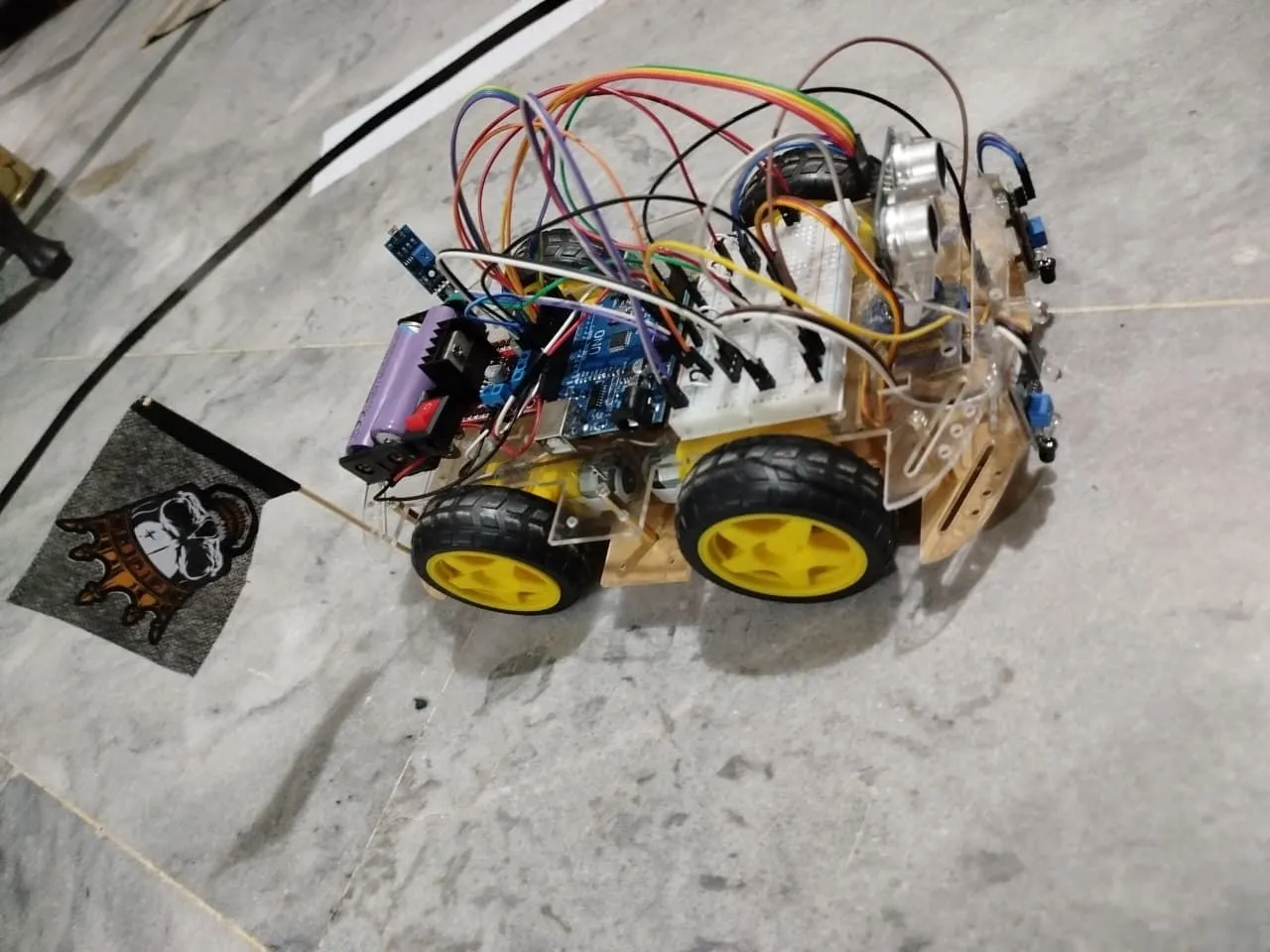
- Integrated the controller, sensor wiring, driver, motors and prototype supply into the four-wheel hardware shown in the gallery.
Design constraints
- Navigation depends on several sensor inputs sharing one control and power arrangement.
- The reported performance figures are prototype-caption results. A formal procedure, track layout, lighting conditions and independent validation dataset are not supplied.
Work & results in context
- Implemented a semester robot integrating sensing, embedded processing, motor actuation and power management.
- The caption reports 95–97% line-tracking precision, obstacle response below 250 ms, approximately 0.8 A average load and approximately 2.5 hours operation.
- These figures describe reported prototype behaviour, not performance guaranteed across different surfaces, lighting or operating conditions.
Engineering takeaways
- Sensor interfacing becomes useful navigation only when readings, embedded decisions and motor actuation work together.
- Power demand and operating time belong alongside motion behaviour when describing a mobile prototype.
Further work
- Further evaluation would need repeatable conditions and a documented procedure for line tracking, obstacle response and operating time.
Figures in context
Visual record
Images & diagrams
Continue exploring
More engineering work
Electric mobility
Range Extended Electric Vehicle
Developing a REEV prototype for areas with limited charging infrastructure, combining electric propulsion with an engine-driven generator. FYP-1 established the architecture and integration methodology.
View projectEmbedded systems
Smart Access & Monitoring
An 8051 access-control and environmental-monitoring design combining PIN authentication, sensor inputs, event logging and emergency override.
View projectEmbedded systems
Electronic Voting Machine
An 8051 academic hardware prototype for candidate input, vote counting and LCD result display, including debouncing and winner/tie logic.
View project